Give machines an acoustic sense of place.
Perceive events, localize sources, understand intent and act with spatial context.
Design your integration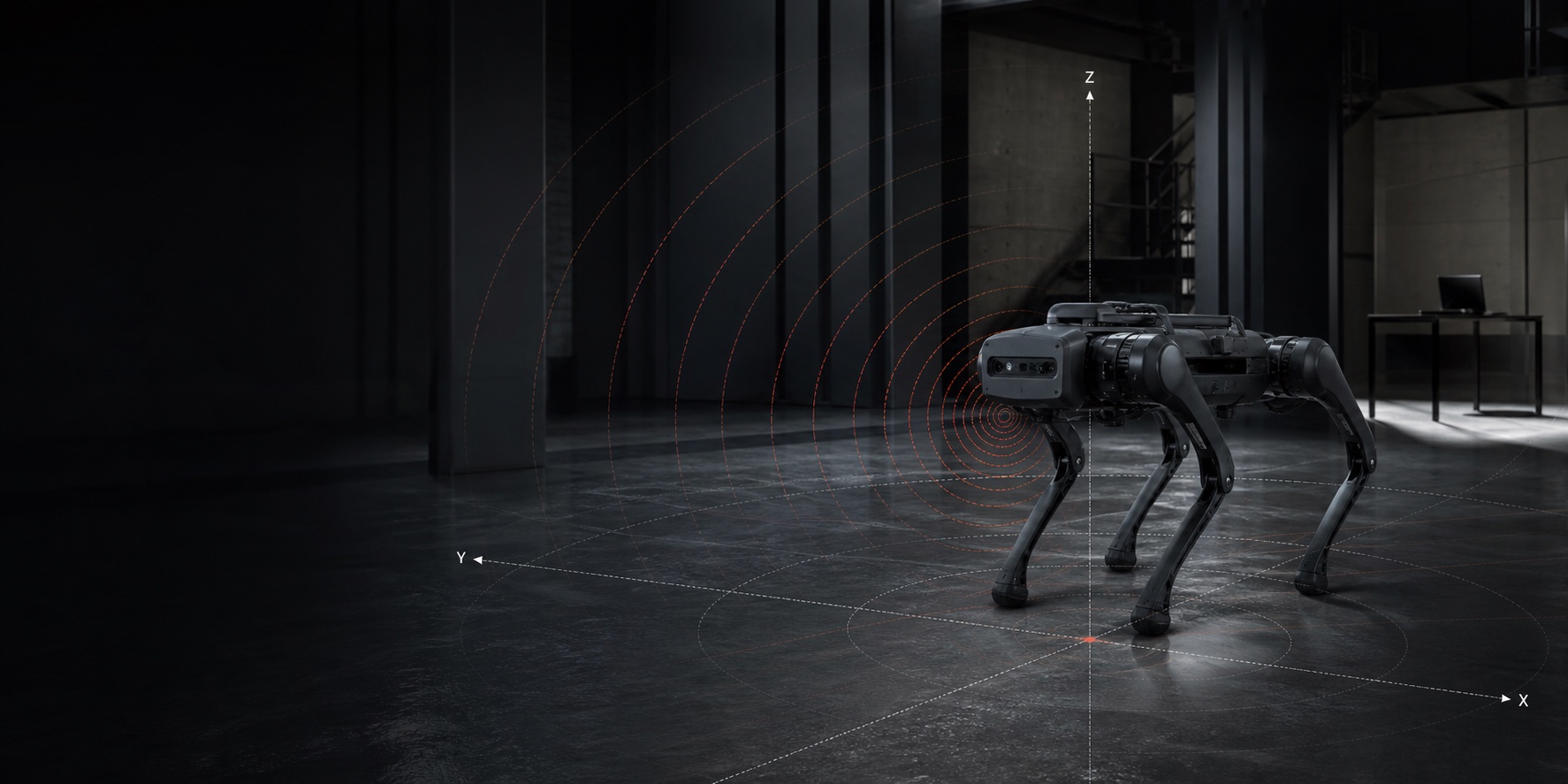
What the system understands
Hear the environment
Detect alarms, voices, impacts and machine-state sounds across space and time.
Locate and track
Estimate direction and distance, then maintain source tracks while the robot moves.
Interpret the scene
Associate sound with objects, zones, activities and operational context.
Coordinate action
Share scene state with planning, control and fleet systems for coordinated response.
Reference architecture
Arrays, sensors and device context
Signal front-end and embedded inference
Scene state, policies and orchestration
Products, robots and spatial systems
Operations, analytics and enterprise APIs
Ways to build
Algorithms & SDKs
Modular acoustic perception and spatial understanding capabilities for product teams that already own the application and hardware experience.
02AOS Runtime
A deployable operating layer for teams that need model services, scene state, policies, device coordination and observability in one system.
03Reference Modules
Reference sensing and edge-compute designs combine recommended hardware topology, software configuration and validation methods for a defined scenario.